









Tough Case vs Glass Case — Which One's Actually for You?
You've narrowed it down to two. A tough case or a glass case. Both look good in product photos. Both promise protection. And both have people swearing they're "the best." So now you're stuck comparing them at 1 AM on your phone, trying to figure out which one deserves your money.
We get it. The tough case vs glass case phone debate comes up constantly — in our DMs, in reviews, in Reddit threads. And most comparisons online are either too technical or trying to sell you ONE type without being honest about the trade-offs.
This isn't that. This is the full breakdown — material, protection, style, price, durability — so you can choose with confidence instead of confusion. No corporate fluff. No filler. Let's get into it.
What Is a Tough Case?
A tough case (sometimes called a hard case or an impact case) is built around one priority: keeping your phone ALIVE through whatever your day throws at it. The construction is usually dual-layer — a hard polycarbonate shell on the outside with a shock-absorbing TPU liner on the inside. Think of it as armour that doesn't look like armour.
The exterior is rigid and takes the initial hit. The interior flexes and disperses the energy before it reaches your phone. This two-layer approach is why tough cases handle drops, bumps, and the chaos of being tossed into bags with keys and coins better than most alternatives.
Modern tough cases have come a LONG way from the bulky, ugly options of five years ago. The best ones — like the GRL® Tough Cases — are slim enough to slide into a pocket while still offering serious drop protection. Raised edges around the camera and screen keep the vulnerable parts off surfaces when you place your phone face-down.
The finish is typically matte or slightly textured, which means grip is excellent. You won't feel like you're holding a bar of soap. And because the material doesn't show fingerprints easily, it stays looking CLEAN throughout the day without constant wiping.
What Is a Glass Case?
A glass case features a tempered glass back panel fused to a TPU or bumper frame. The glass is what gives it that signature look — glossy, reflective, with colours and designs that appear deeper and more vivid than any printed case can achieve. There's a richness to it that catches light in a way polycarbonate never will.
The tempered glass used in quality cases is hardened to resist everyday scratches. It won't scuff from sitting in your bag or being placed on rough surfaces. The designs are printed or layered BENEATH the glass, which means they're protected from fading, peeling, or wearing off over time — a problem that plagues cheaper printed cases.
The GRL® Glass Cases use 9H tempered glass — the same hardness rating used for screen protectors. The frame around the edges is soft TPU, which provides shock absorption where it matters most: the corners. Raised bezels keep the screen and camera module safe.
Glass cases tend to be slightly heavier than tough cases due to the glass panel. They also have a smoother surface, which gives them that premium, polished feel — though it does mean they're more slippery in hand compared to matte-finish alternatives.
Protection Comparison — Tough Case vs Glass Case
This is where the conversation gets REAL. Because protection isn't one thing. It's drop protection, scratch resistance, corner impact absorption, and everyday durability all rolled together. And tough cases and glass cases handle each of these differently.
Drop Protection
Tough cases win this category. The dual-layer construction is specifically engineered to absorb and distribute impact force. If you're someone who drops their phone regularly — on concrete, on tile, off the bed at midnight — a tough case is built for your life. Most quality tough cases are rated for drops from 4-6 feet onto hard surfaces.
Glass cases offer decent drop protection thanks to their TPU bumper frames, but the glass back panel IS a vulnerability. A direct impact on a hard, pointed surface can crack the glass back. It won't shatter into pieces (tempered glass fractures into contained patterns rather than sharp shards), but a cracked case back is still a cracked case back.
Scratch Resistance
Glass cases take this one. The 9H hardness rating of tempered glass means everyday objects — keys, coins, zippers — won't leave marks. Your case will look as clean after six months as it did on day one. That's a genuine advantage.
Tough cases with matte or textured finishes can pick up light surface scratches over time, especially from rough surfaces. They won't affect the case's performance, but they ARE visible under certain lighting. Glossy polycarbonate tough cases are more scratch-prone than matte ones.
Corner Protection
Both types perform well here, assuming the case is well-designed. Tough cases often have reinforced air-cushion corners that compress on impact. Glass cases rely on the TPU bumper frame for corner protection. In our experience, tough cases have a slight edge because the entire structure flexes together — there's no rigid glass panel creating stress points.
The Verdict on Protection
If protection is your TOP priority — if you work on your feet, have kids, or your phone has already survived three cracked screens — go tough. If you're reasonably careful and want scratch-free aesthetics with solid everyday protection, glass holds up beautifully.
Style Comparison — Because Looks MATTER
Let's not pretend otherwise. Half the reason you're buying a case is because of how it looks. Anyone who says protection is the ONLY factor is either lying or carrying a phone they don't care about. Style is protection too — it protects your mood every time you pick up your phone.
Tough Case Aesthetics
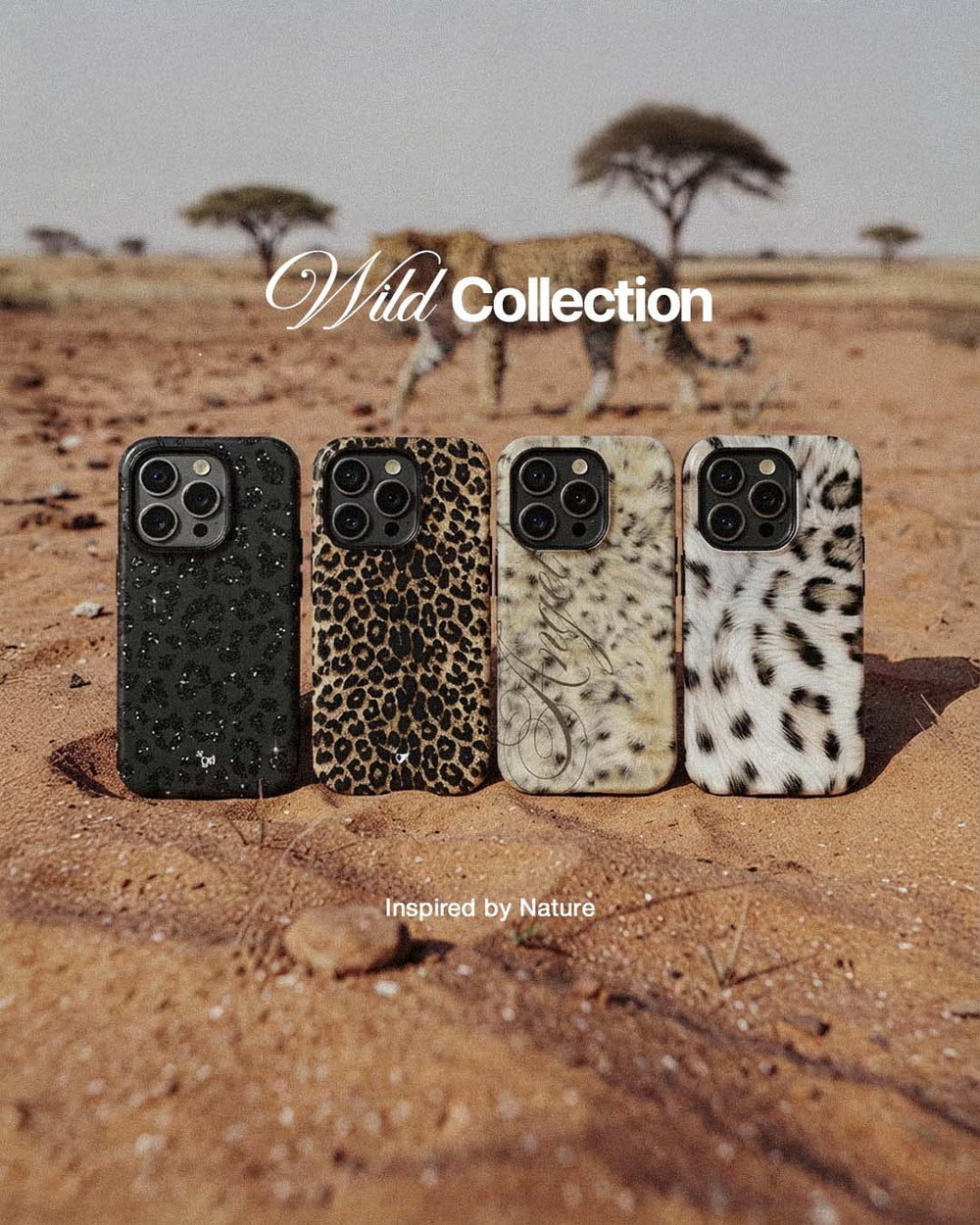
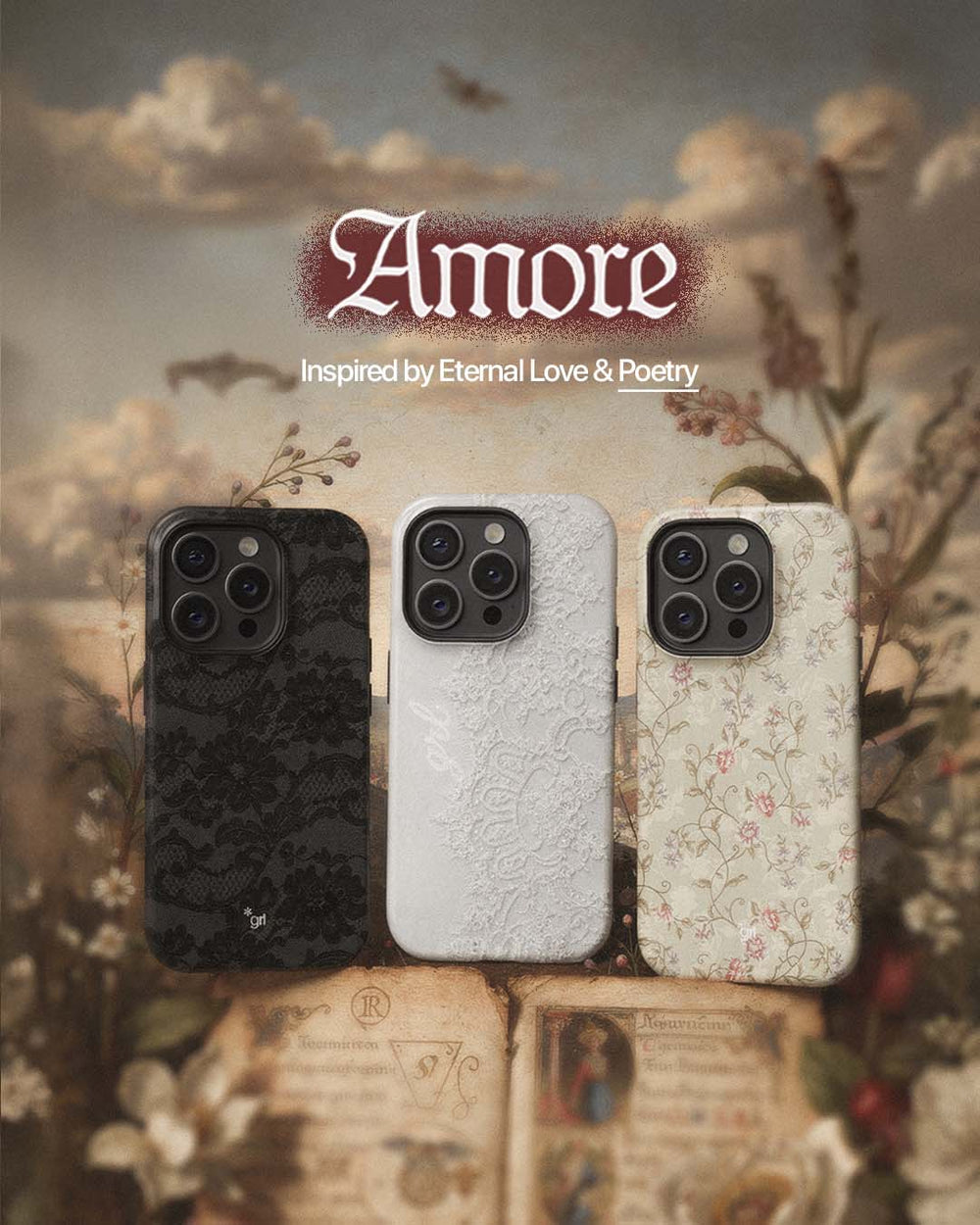
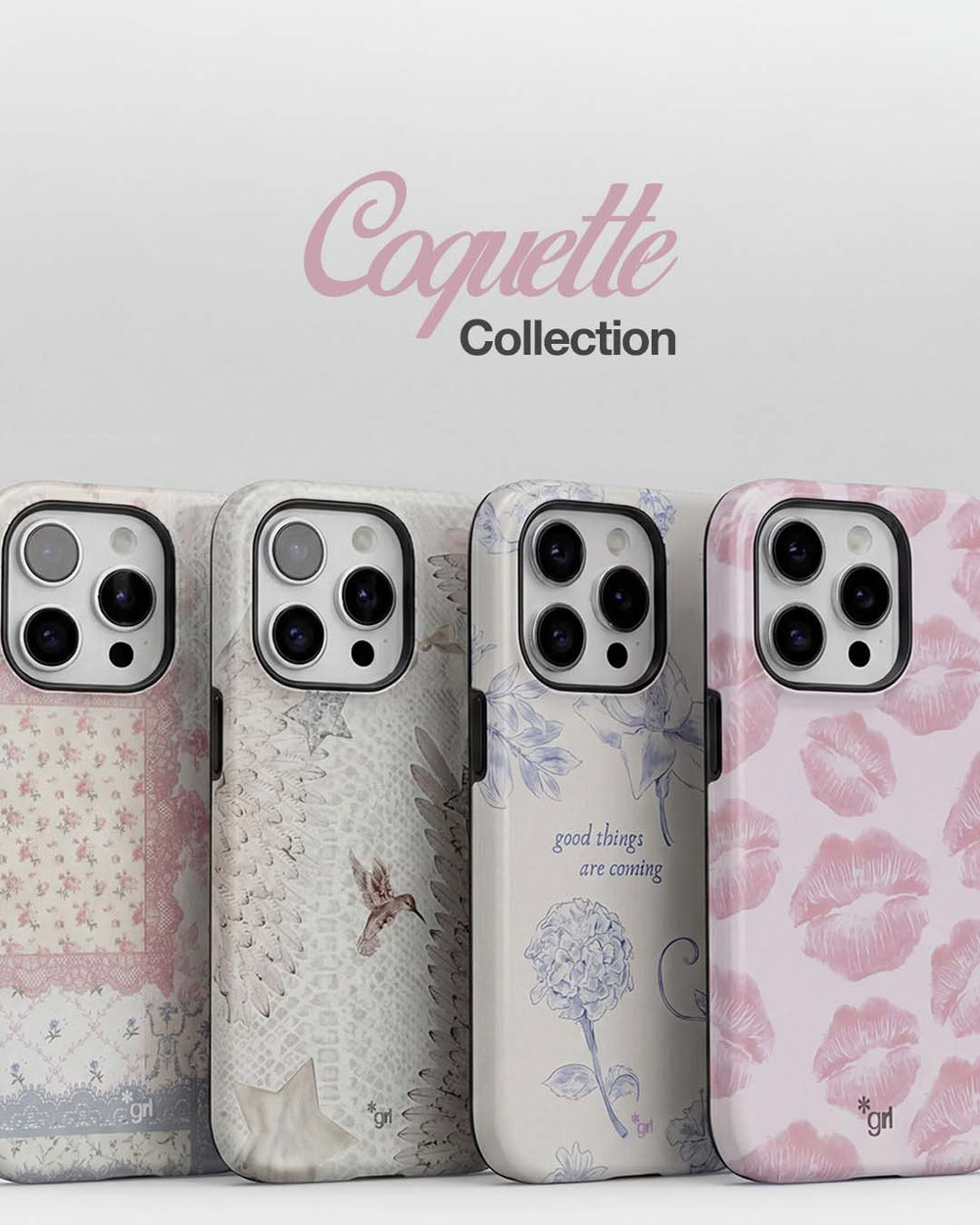
Tough cases lean toward clean, graphic-forward design. Because the surface is printed polycarbonate, you get sharp lines, bold typography, and high-contrast designs that read well from a distance. The matte finish gives them a modern, understated quality. Think editorial. Think intentional.
The GRL® Tough Cases play into this strength with designs that are bold without being loud. You'll find minimalist patterns, curated typography, and colourways that work with real wardrobes — not random Pinterest boards.
Glass Case Aesthetics
Glass cases are the showpieces. The depth and luminosity of designs under glass is something flat printing cannot replicate. Colours pop harder. Metallics shimmer. Dark tones have a lacquer-like richness. If your phone case is an ACCESSORY — something you coordinate with your outfit — glass is the format that delivers that energy.
The GRL® Glass Cases treat the glass back like a canvas. The designs have a dimensional quality that shifts depending on how light hits them. It's the difference between a poster and a framed print.
The Verdict on Style
Tough cases are for people who want their case to COMPLEMENT their aesthetic without demanding attention. Glass cases are for people who want their phone to be a STATEMENT. Neither approach is better — they serve different intentions.
Price Comparison — What You're Actually Paying For
Glass cases typically cost more than tough cases. That's true across the market, not only at GRL®. The reason is material cost — tempered glass panels, the fusion process, and quality control (glass rejects are higher than polycarbonate rejects) all add up.
But here's the thing most comparisons won't tell you: cost-per-month matters more than sticker price. A tough case that costs less upfront but lasts 18 months might be a better VALUE than a glass case that costs more and lasts 12 months. Or a glass case that maintains its pristine look for a year might justify the premium over a tough case that shows wear at month six.
Your usage pattern determines the real cost. If you're hard on your phone, the tough case's durability makes it the smarter spend. If you're careful and want that showroom look for the full year, the glass case holds its value better aesthetically.
What About Replacement Cost?
If a tough case takes a bad fall, it usually survives. Scuffed, maybe. Cracked, rarely. If a glass case takes the same fall, you might need a replacement. Factor that in. The potential for replacement makes the tough case the more economical choice for people with active, unpredictable lifestyles.
Grip and Daily Feel — The Factor Nobody Talks About
Here's something reviews almost NEVER cover, and it matters more than you'd think. How does the case feel in your hand for the 150+ times you pick it up each day?
Tough cases with matte or textured finishes have superior grip. Your hand wraps around the case and it STAYS. No anxiety when you're texting one-handed on the metro. No white-knuckle moments when reaching for it on a wet counter.
Glass cases are smooth. Premium smooth. Which feels incredible — like holding something expensive — but it comes with reduced friction. If you have dry hands or tend to use your phone one-handed a lot, you'll notice the difference. Some people add a phone grip or ring holder to compensate, which works but changes the case's profile.
This isn't a flaw of glass cases. It's a CHARACTERISTIC. Some people prefer the smooth, cool feel of glass against their palm. Others need the security of a textured grip. Know which camp you're in before you buy.
Weight and Thickness — Does It Fit Your Life?
Tough cases are generally lighter and slimmer than glass cases. The difference is small — we're talking grams, not ounces — but if you're someone who notices their phone in a tight pocket or wants the most minimal profile possible, tough cases have the edge.
Glass cases add a subtle heft. Some people interpret that as "premium" — the weight communicates quality. Others find it noticeable after switching from a lighter case. If you spend hours holding your phone (be honest — we all do), the weight difference compounds.
Neither type is bulky by modern standards. Both fit in standard pockets and work with most wireless chargers. But if absolute minimalism matters to you, tough cases deliver a sleeker package.
Which One Should You Pick? A Decision Framework
Forget the specs for a second. Here's how to think about this decision based on who you are and how you live.
Choose a Tough Case If You...
- Drop your phone more than you'd like to admit
- Work in environments where your phone takes a beating — kitchens, gyms, construction sites, anywhere unpredictable
- Prefer a matte, understated look over glossy finishes
- Want maximum grip without accessories
- Carry your phone in bags with other items (keys, makeup, stationery)
- Prioritise RELIABILITY over aesthetics — though you still want it to look great
Browse the full collection: GRL® Tough Cases →
Choose a Glass Case If You...
- Treat your phone as a style accessory and coordinate it with outfits
- Are reasonably careful with your belongings
- Want the most vibrant, eye-catching designs possible
- Love a glossy, premium finish
- Care deeply about scratch resistance and long-term visual quality
- Want your case to be the thing people NOTICE first
Browse the full collection: GRL® Glass Cases →
Final Verdict — Tough Case vs Glass Case
There is no universal winner. Anyone who tells you one is objectively better than the other is either selling something or hasn't thought about it hard enough.
A tough case is the reliable choice. It handles drops, daily wear, and unpredictable environments without flinching. It's the case for people who want PROTECTION they don't have to think about, wrapped in a design that feels considered and intentional. If your phone is a tool that also needs to look good, tough is your answer.
A glass case is the expressive choice. It turns your phone into something you're PROUD to set on the table. The designs are richer, the finish is more luxurious, and the scratch resistance keeps it looking perfect. If your phone is an extension of your personal style, glass delivers that in a way nothing else can.
The right question isn't "which is better?" It's "which one matches how I actually LIVE?" Answer that honestly, and the choice makes itself.
Whichever you choose, make sure it's a case you feel something about. Life's too short for phone cases that don't make you feel GOOD.
Frequently Asked Questions
Is a tough case better than a glass case for drop protection?
Yes. Tough cases are specifically engineered for impact absorption with their dual-layer polycarbonate and TPU construction. They handle drops from greater heights and onto harder surfaces than glass cases. If you're prone to dropping your phone, a tough case is the safer bet. Glass cases offer solid everyday protection, but a severe drop can crack the tempered glass back panel.
Do glass cases scratch easily?
Quality glass cases with 9H tempered glass are highly scratch-resistant — more so than tough cases, actually. Everyday objects like keys and coins won't leave marks on the glass surface. The designs are printed beneath the glass, so they're protected from wear and fading too. Scratch resistance is one of the biggest advantages of a glass case over other case types.
Which phone case type lasts longer — tough or glass?
It depends on your usage. Tough cases generally have a longer functional lifespan because they're more resistant to impact damage. They may show minor surface wear over time, but they rarely crack or break. Glass cases maintain their VISUAL quality better (no surface scratches, vibrant designs), but are more vulnerable to shattering from hard drops. For rough daily use, tough cases last longer. For careful users, glass cases can look pristine for over a year.
Can I use wireless charging with both tough and glass cases?
Yes. Both tough cases and glass cases from reputable brands are wireless charging compatible. Neither type is thick enough to interfere with Qi or MagSafe charging. You won't need to remove the case to charge wirelessly — that's a non-issue with modern case designs from brands like GRL®.
Are glass cases heavier than tough cases?
Slightly, yes. The tempered glass panel adds a few grams compared to a polycarbonate tough case. The difference is small — most people won't notice it in isolation. But if you're switching FROM a tough case TO a glass case, you might feel the added weight initially. Some people prefer the heft because it feels more premium. Others prefer the lighter profile of a tough case. It comes down to personal preference.